 Pawel M. Konefal
AI & development ·
AI and human judgment
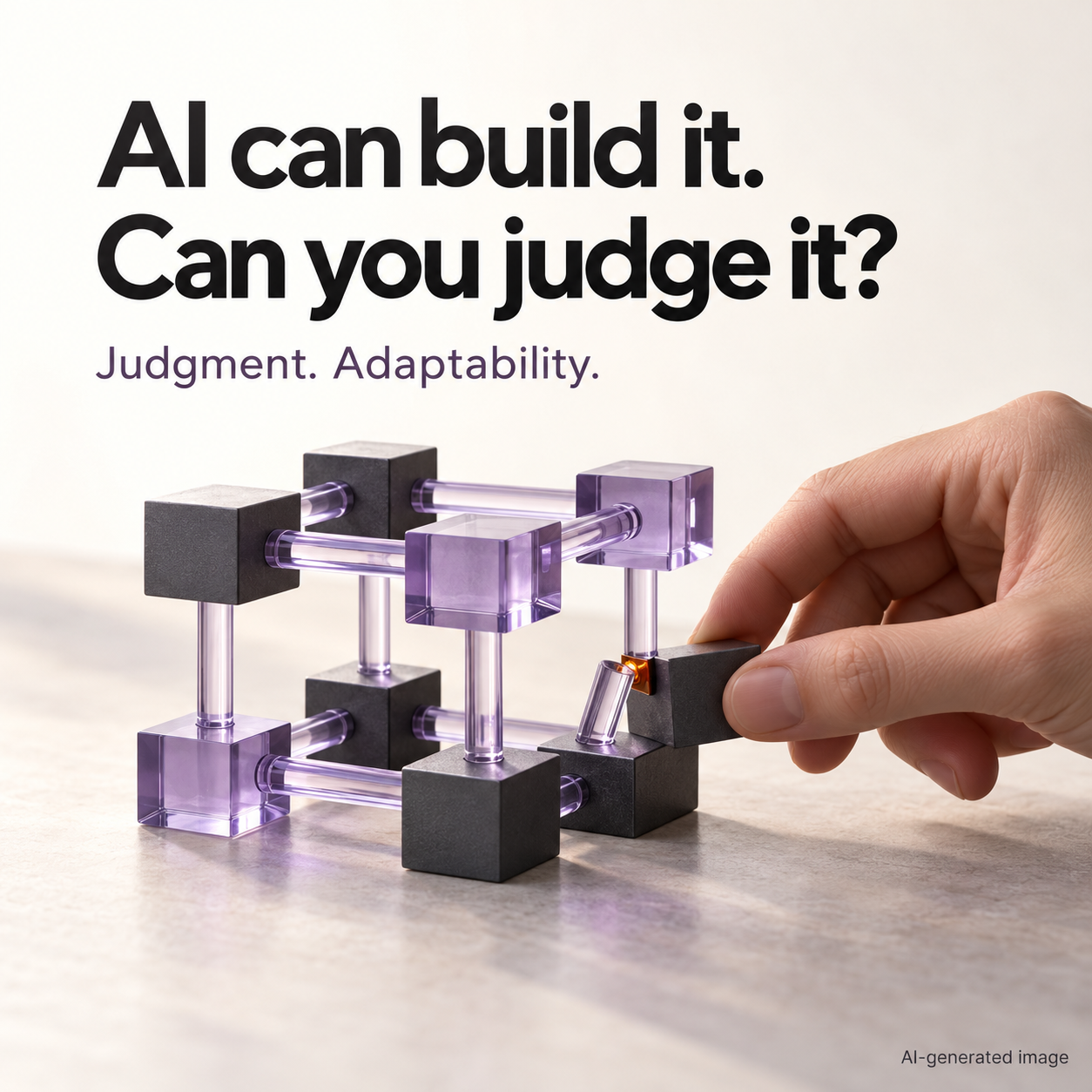
AI can help you build software you don't understand.
It can also make a bad technical decision look convincing.
A working demo tells you something. It doesn't tell you how the system handles failures, whether its security assumptions hold, or how painful the next change will be.
If you lack the knowledge to assess those things, an agent can lead you down the wrong path without you noticing. You may not know which alternatives to ask about, or how to recover when its approach falls apart.
Asking the same agent "is this good?" gives you another answer to evaluate.
That knowledge can be learned. AI can help with the learning, too. But generating a result and understanding it are separate achievements.
For experienced developers, I think changing habits may be the harder problem.
A skill you've spent years mastering can become part of your identity. Handing some of that work to an agent can feel like cheating. It can raise an uncomfortable question: what is my contribution now?
Ego can play a part. So can the simple pull of a familiar workflow: opening the editor and doing everything yourself because that's how you've always worked.
There are sound reasons to limit AI use, including confidentiality and unreliable results. My concern is dismissing the tools before seriously trying a different way of working.
Working with agents asks us to practise delegation: define the problem clearly, challenge proposed decisions, check the result and take responsibility for what gets shipped.
Technical experience gives us a basis for doing that. Willingness to change our habits determines how much use we make of it.
Which has been harder for you: learning to judge the output, or changing how you work?
As the German saying goes:
"Wer nicht mit der Zeit geht, der geht mit der Zeit."
Loosely translated: "If you don't move with the times, you'll eventually be left behind."